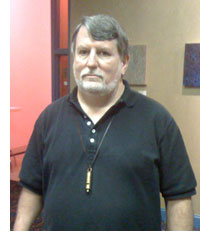
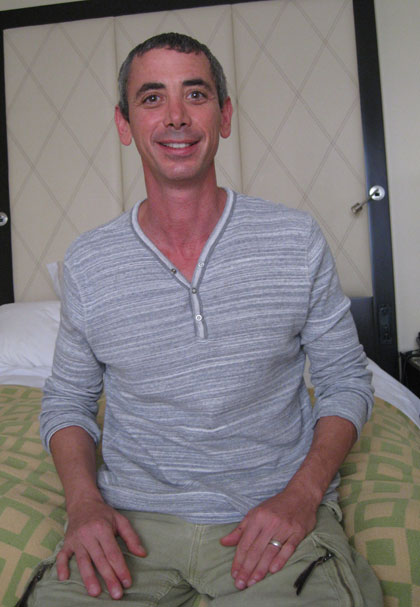
10-15-10:Mark L. Van Name Interviewed at SF in SF on September 11, 2010
"I spent three years in a paramilitary group from ages ten to thirteen learning to kill."
—Mark L. Van Name
There's a certain intensity that writers can bring to their work. Sometimes, it comes from their readings as a child. And sometimes, it comes from their experiences as a child. Mark L. Van Name may not have been born to write the sort of hard-edged military / detective science fiction that is now his trademark. But he certainly was well-trained for it.
Van Name's newest novel is 'Children No More.' It's the fourth in his Jon and Lobo series, after 'One Jump Ahead,' 'Slanted Jack' and 'Overthrowing Heaven.' Jon is a superman mercenary courtesy of some nanotechnology enhancement, and Lobo is his sentient ship. This time, he's asked to help free some children who have been press-ganged into war. Of course, this proves to be more difficult than he might have imagined.
For this novel, Van Name draws on his own childhood and on his work for child soldiers. Moreover he's donating 100% of his proceeds from the sales of the hardcover novel to Falling Whistles www.fallingwhistles.com a non-profit that helps to reintegrate children soldiers in the Congo.
Stories play such an important part in our lives, but it is sometimes difficult to see that when you are enmeshed in the middle of your own story. Works like Van Name's 'Children No More,' when matched with his intense childhood highlight the importance of our stories in our lives. You can hear Van Name's story by following this link to the MP3 audio file.
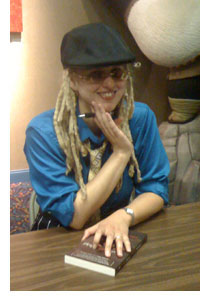
10-14-10:Amelia Beamer Interviewed at SF in SF on September 11, 2010
"The sexuality of zombies has been in the background long enough."
—Amelia Beamer
I guess that quote puts it all rapidly in perspective with regards to Amelia Beamer's 'The Loving Dead.' I spoke with Beamer at SF in SF, and I have to say that she is just as engaging and charming as her book, and thankfully, not at all as violently bloody. In fact, she comes from a literary fiction background. Yes, readers, Our Lady the Queen of Zombies started her life in the world of Kitchen Window Epiphanies.
In retrospect, I suppose the literary pre-life should not come as a shock. Beamer after all is on the staff of Locus, the science fiction world's go-to publication for serious criticism. But it was still fun to tease her past out of her as her novel 'The Loving Dead' turns zombies into sex objects. Now that's a kitchen window epiphany.
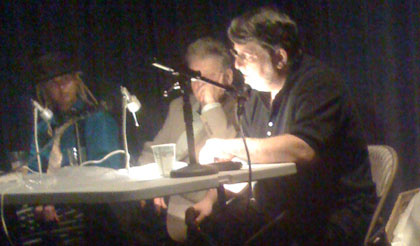
10-13-10:SF in SF panel from September 11, 2010, with Amelia Beamer, Terry Bisson, Mark L. Van Name and Gary K. Wolfe
"Those zombies were metaphors for slavery."
—Gary K. Wolfe
SF in SF on 9/11/10 managed to quickly turn itself into a full-blown science fiction convention-style panel discussion, with the focus starting out on zombies. At this point it is useless to rail against the ubiquity of zombies or vampires for that matter. One's time is better spent finding the good works in the genre, missing the bad, and examining the implications of their popularity.
To me, it's interesting that zombies are so deeply affiliated with the horror genre, when they are not particularly scary. Sure they generally don't have good intentions, and yes, zombie stories tend to include a lot of gore, but the same could be said of doctors as characters in many hospital sagas.
Beamer, Bisson, Van Name and Wolfe pretty much did to the subject of zombies what zombies are supposed to do to their prey; gutted and dragged out the entrails. I was really heartened, I have to admit, to see that Wolfe remembered a very different kind of zombie, the virtual slave, as most notably portrayed in Jacques Tourner's I Walked With a Zombie.
As a reviewer and reader, you can't read everything and everyone that you might wish to read from the get-go. I'm sort of obsessive that way. I prefer to read a writers first book first, second book second, and so on, to see the natural development that happens in the collaboration between writers, publishers and readers. That cannot always happen. And sometimes your first experience of a writer is a book that is quite atypical of their writing.
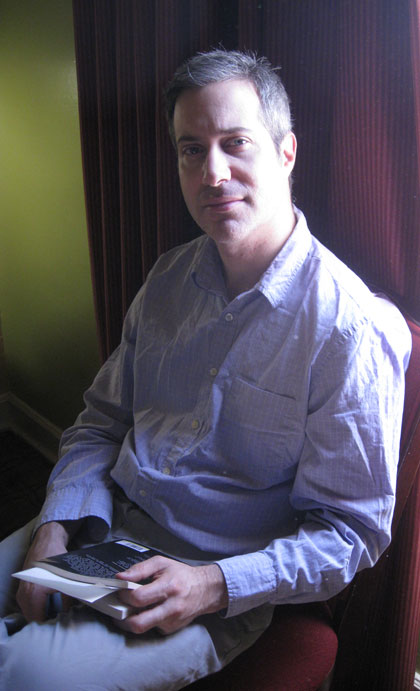
I like to read novels a lot, but I'd never read anything by Darin Straus. His work sounded good to me, but it had just never come my way. He was acclaimed enough to have no need of exposure, so I simply thought I would wait until the right book came along. To a degree that did not happen. The first book of his that came my way, 'Half a Life,' was exactly the sort of book that were you to describe it to me without handing me a copy, I would probably decide to give it a pass. He's a novelist, and well-regarded, so the idea of a short memoir/autobiography, whatever term you use to describe it, makes it naturally (at least to my unnatural brain) less interesting.
Fortunately, the folks at McSweeney's did send a copy to me, and fortunately for me, I opened it up. Credit the great layout, and the incredible writing, I don't care. I read about three paragraphs and was hooked. It's engrossing and yes, exciting to read. But it is also very personal, so reading it for an interview with the writer meant a different style of preparation. Add to that a very crowded week of literary interviews and activity. It was "litquake" here in San Francisco, so there was an additional SF in SF gig to record. Harried does not even get close to my state of mind.
But Straus, who was staying in a hotel in San Francisco where I once spent a night, was easygoing and very genial even though was late, and even though he had a "real" interview with one of the local papers hot on
the heels of our conversation. Once I got the gear set up, the conversation unfolded with the ease of my reading experience. It was simple, engrossing and in the end, rather therapeutic. You can get your own dose of prose interview therapy by following this link to the MP3 audio file.
10-11-10:A 2010 Interview with Stephen Kotler
"..we wanted to combine our packs and combine our lives and they sold our house out from under us..."
—Stephen Kotler
Of course it is just coincidence. But I'd been thinking about Steven Kotler and wondering what was up with him since my interview with Susan Casey about 'The Wave.' I'm not the sort of reader who follows a lot of surfing literature, even though I've lived near both towns that were in contention for the title of "Surf City."
When Susan Casey, with her tales of surfers and giant waves rattled into my inbox, Kotler's 'West of Jesus' came naturally to mind. Then he sent me an email telling me he'd be in town to talk about 'A Small Furry Prayer,' and I was thinking, "Well, gosh, what took you so long?" Sure after reading the book, I had a good idea. But a reading experience provides only one — enjoyable, complex, of course — perspective. Talking to Kotler was another, very different, but equally enjoyable immersion.
Now we weren't swilling beers and sitting in a bar when I recorded this interview, though the conversation had that kind of easygoing feel. Talking to Kotler was akin to reading the book, especially if you think of 'A Small Furry Prayer' as the second book in Kotler's Neuroscience Memoir Trilogy. There's a catching-up-with-a-friend feel to our conversation, and that is also in the book.
That's what makes his books so appealing. Kotler is chock full of great information, and the moron charm that pervades his books is present in person as well. He's super-enthusiastic, but well-aware that he's liable to plunge into problems for which he's not well-prepared. When we spoke, I didn't get simply the story, I could hear the voice that had written the book, and going back to the book afterwards, you can really get that hanging-out feel.
Frankly, conversations like the one with Kotler are the reason I do this. This way, readers can hear the voice of the writer before they read the book, and go in with just that extra bit of information to pull the book together in a more organic fashion. We don't talk all that much about what's in the book, so much as how he got it there. I like the idea of reading a book and hearing it in the author's voice. And there's a lot of voice here; I looked up and saw that we had spoken for over an hour.
I trust readers noted the trilogy mention, and I confess that's something I made up — as to trilogy and the name, that's just my take, but Kotler tells me has another memoir in the hopper. And to me these books, while they are memoirs and clearly non-fiction, they really do have the feel of a series, and one headed, I hope to a conclusion of some sort with the next book. I like the idea of a Neuroscience Memoir Trilogy, and I like Kotler's writing. You can hear the voice by following this link to the MP3 audio file.
New to the Agony Column
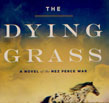
09-18-15: Commentary : William T. Vollman Amidst 'The Dying Grass' : An Epic Exploration of Simultaneity
Agony Column Podcast News Report : A 2015 Interview with William T. Vollman : "...a lot of long words that in our language are sentences..."
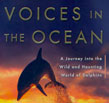
09-05-15: Commentary : Susan Casey Listens to 'Voices in the Ocean' : Science, Empathy and Self
Agony Column Podcast News Report : A 2015 Interview with Susan Casey : "...the reporting for this book was emotionally difficult at times..."
08-21-15: Agony Column Podcast News Report : Senator Claire McCaskill is 'Plenty Ladylike' : Internalizing Determination to Overcome Sexism [Incudes Time to Read EP 211: Claire McCaskill, Plenty Ladylike, plus A 2015 Interview with Senator Claire McCaskill]
Agony Column Podcast News Report : Emily Schultz Unleashes 'The Blondes' : A Cure by Color [Incudes Time to Read EP 210: Emily Schultz, The Blondes, plus A 2015 Interview with Emily Schultz]
07-05-15: Commentary : Dr. Michael Gazzaniga Tells Tales from Both Sides of the Brain : A Life in Neuroscience Reveals the Life of Science
Agony Column Podcast News Report : A 2015 Interview with Michael Gazzaniga : "We made the first observation and BAM there was the disconnection effect..."
04-21-15: Commentary : Kazuo Ishiguro Unearths 'The Buried Giant' : The Mist of Myth and Memory
Agony Column Podcast News Report : A 2015 Interview with Kazuo Ishiguro : ".... by the time I was writing this novel, the lines between what was fantasy and what was real had blurred for me..."
Agony Column Podcast News Report : A 2015 Interview with Marc Goodman : "...every physical object around us is being transformed, one way or another, into an information technology..."
Agony Column Podcast News Report UPDATE: Time to Read Episode 199: Marc Goodman : Future Crimes: Everything Is Connected, Everyone Is Vulnerable and What We Can Do About It